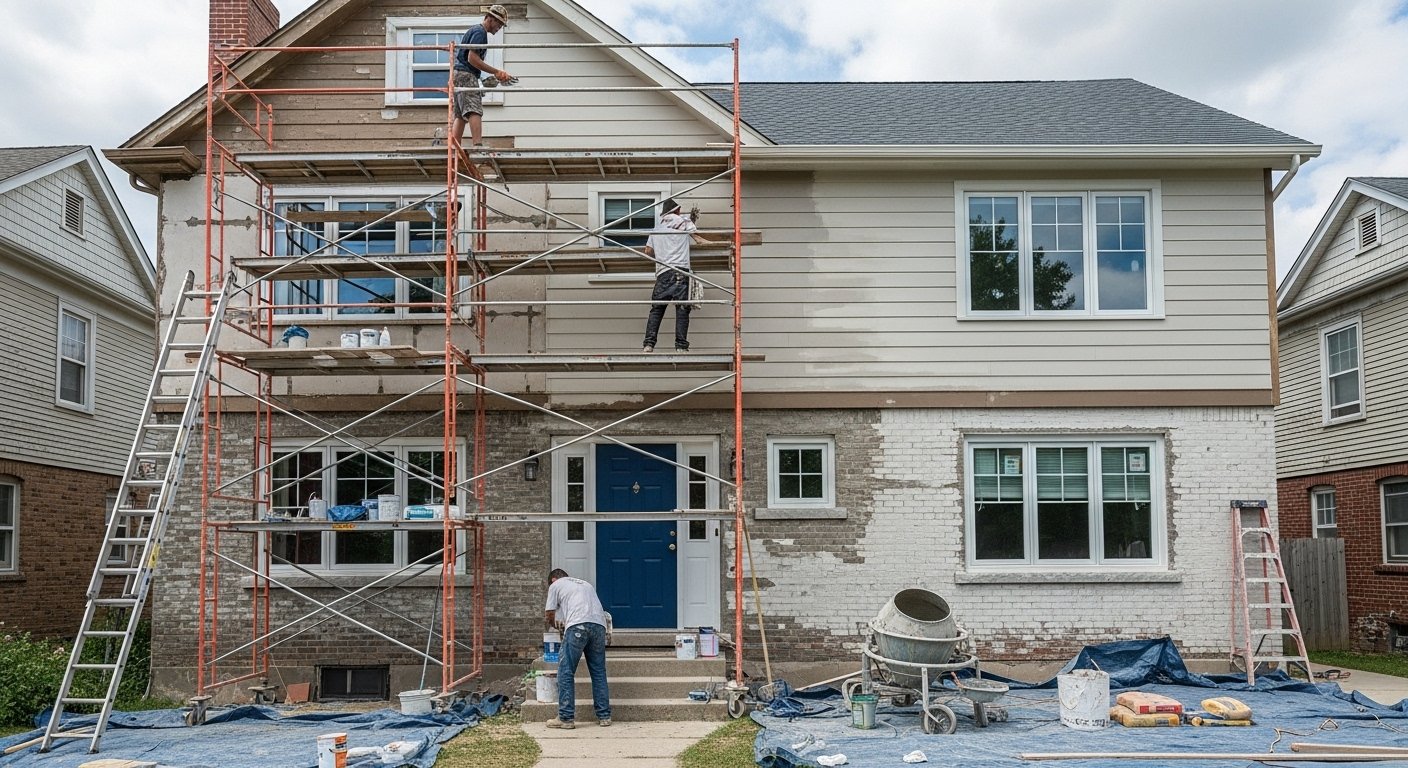
Exterior Restoration
Restore peeling, chalking, or weathered exteriors with a prep-first approach that holds up through Illinois seasons.
Freeze–thaw cycles create movement. Wood swells and shrinks, caulk lines open and close, and tiny moisture pathways become big problems over time. When moisture gets behind paint and then freezes, pressure increases and adhesion fails. That’s why you’ll often see peeling at trim joints, window edges, and end-grain areas first. This guide explains what to look for and which prep steps reduce repeat failure.
Moisture expansion is the core issue. When water gets into joints and then freezes, pressure increases and coatings lift.
That’s why you’ll often see peeling at trim joints, window edges, and end-grain first.
If you catch early signs, you can prevent widespread failure. Look for patterns rather than isolated chips.
The earlier you address moisture pathways, the longer the next paint system can last.
Good restoration is mostly moisture and adhesion management: remove failures, seal what’s exposed, and rebuild joints correctly.
Product choice matters, but only after the substrate is stable and dry.
Text a few photos and what you’re trying to change. We’ll tell you what scope typically solves it and what variables will affect price and timeline.
If you’re ready to price out the work, these pages break down scope, process, and FAQs.
Restore peeling, chalking, or weathered exteriors with a prep-first approach that holds up through Illinois seasons.
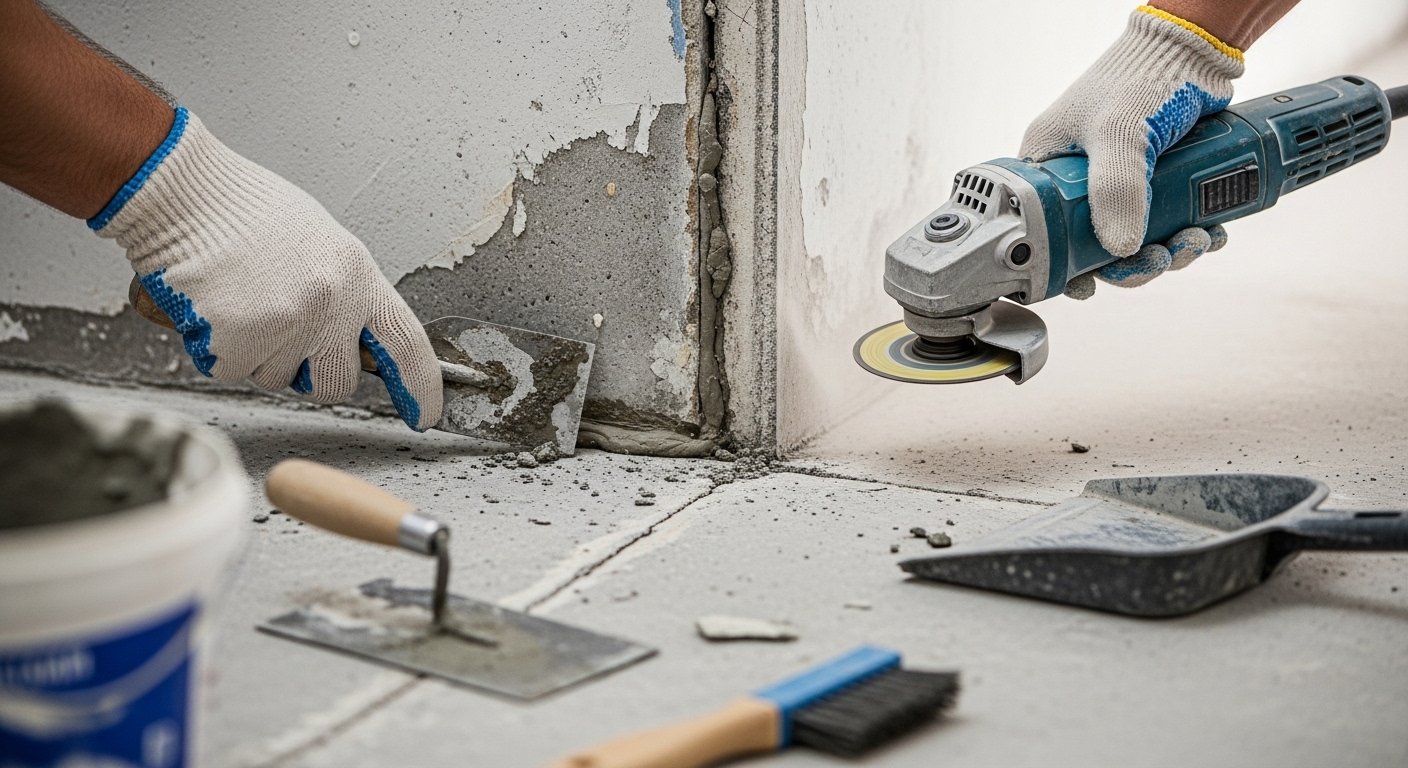
Drywall repair, patching, caulking, sanding, and priming—so the finish coat looks right and lasts.
Based in Algonquin, IL. We serve:
Algonquin, IL, Carpentersville, IL, Lake in the Hills, IL, East Dundee, IL, West Dundee, IL, Fox River Grove, IL, Crystal Lake, IL, Huntley, IL, Barrington, IL, Elgin, IL, Cary, IL, Dundee, IL, Sleepy Hollow, IL, Barrington Hills, IL, Gilberts, IL, Prairie Grove, IL
Moisture and expansion/contraction can break adhesion, especially where prep or sealing was weak.
Yes. Failed caulk lets water in, which leads to swelling, rot, and premature paint failure.
When the substrate is dry and temps are within coating specs—often late spring through early fall.